What Happened to OpenClaw? The Rise, the Hype, and Why It's Fading

In November 2025, a weekend project called Clawdbot took the developer community by storm. By January 2026, it had been renamed twice, hit 135,000 installs, and was being called the future of personal AI. By July 2026, people are writing articles titled “Is OpenClaw Dead?”
So what happened? Let’s break it down.
What Is OpenClaw?
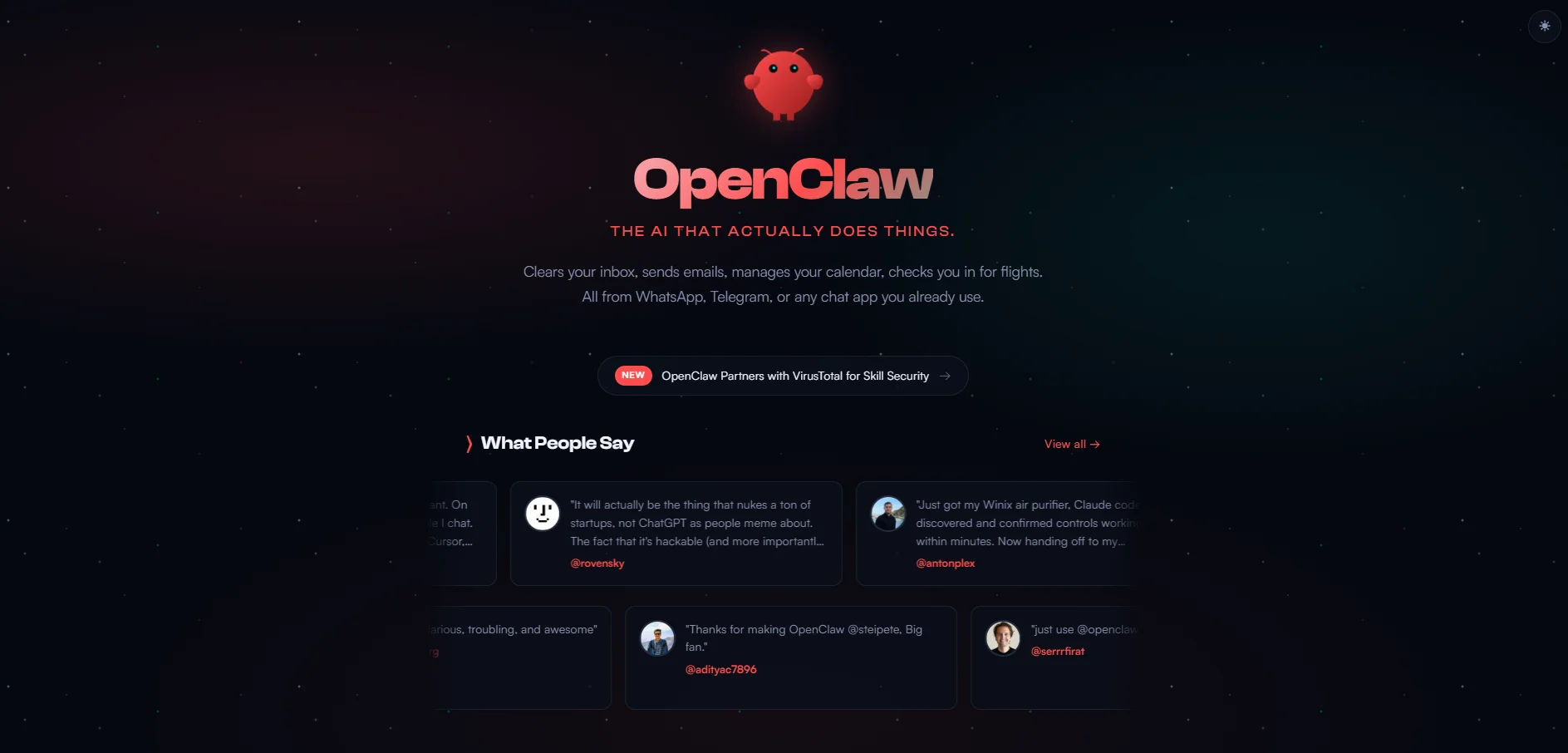
OpenClaw is an open-source AI agent framework created by Peter Steinberger, the founder of PSPDFKit. The idea is simple: a personal AI assistant that runs on your own hardware, connects to your messaging apps, files, shell, browser, and dozens of other services, and actually does things — not just answers questions.
Unlike cloud-based AI assistants, OpenClaw is self-hosted. You run it on a Raspberry Pi, a mini PC, a VPS, or your laptop. It calls cloud AI models (Claude, GPT, Gemini) for reasoning, but the agent runtime, your data, and your conversation history stay on your machine.
Key features include:
- Multi-channel messaging — works across Slack, Discord, WhatsApp, Telegram, iMessage, and 22+ platforms
- Persistent memory — remembers context across months and years, not just the current chat
- Tool execution — can browse the web, manage files, run shell commands, control smart home devices, and even pilot robot arms
- Voice support — speak and listen on macOS, iOS, and Android
- Live Canvas — renders interactive dashboards you can control
- Skills marketplace (ClawHub) — community-built plugins for everything from email management to home automation
The Wild Timeline
OpenClaw has one of the most chaotic histories in open-source AI:
| Date | Event |
|---|---|
| Nov 2025 | Peter Steinberger releases “Clawdbot” as a weekend project. Developer community explodes. |
| Dec 2025 | Rapid growth. Thousands of installs. Integrations multiply. |
| Jan 27, 2026 | Anthropic forces a rename (too close to “Claude”). Becomes “Moltbot.” |
| Jan 30, 2026 | Renamed again to “OpenClaw” — completing the fastest triple rebrand in open-source history. |
| Feb 2026 | 135K installs. ClawHavoc security vulnerability discovered in ClawHub marketplace. |
| Mar 2026 | Robot integration (Unitree G1 humanoid). Growth shifts from exponential to linear. |
| May 2026 | “Claw Chain” — four CVEs enable sandbox escape, data theft, and backdoors. |
| Jul 2026 | Becomes a nonprofit foundation (“Switzerland of AI”). v2026.7.1 release breaks installs. |
What Hardware Can Run It?
One of OpenClaw’s biggest selling points is that it runs on almost anything. The AI model runs in the cloud — OpenClaw’s runtime is just the orchestration layer, which is lightweight.
| Hardware | Specs | Best For |
|---|---|---|
| Raspberry Pi 5 | 4GB+ RAM, microSD + USB SSD, 3–6W power | Always-on, low-power home setups |
| Raspberry Pi 4 | 2GB+ RAM, 16GB+ SD card | Budget option (minimum viable) |
| Intel NUC / Mini PC | 4GB+ RAM, SSD | More headroom for browser automation |
| Cloud VPS | 2+ vCPU, 4GB+ RAM, 20GB+ SSD | 24/7 operation without home hardware |
| Old Laptop | Any modern x86/ARM with 4GB+ RAM | Testing and development |
Official minimum: 1 GB RAM, 1 core, 500 MB free disk, 64-bit OS. Realistic minimum: 2+ vCPU, 4 GB RAM, especially if you want browser automation or multiple agents.
You’ll also need Node.js 22+ and an API key from at least one AI provider (Anthropic, OpenAI, or Google).
Why the Hype Was Real
OpenClaw hit a nerve for several reasons:
- Privacy-first: Your data stays on your hardware. No vendor lock-in. No cloud company reading your conversations.
- Runs anywhere: A $35 Raspberry Pi can be your personal AI assistant. That’s powerful democratization.
- Actually does things: Not just chat — it executes shell commands, manages files, browses the web, controls IoT devices, and even pilots robots.
- Model-agnostic: Works with Claude, GPT, Gemini, Llama, or any OpenAI-compatible API. Switch models without changing your setup.
- Open source: Fully auditable. Modify anything. Fork freely.
- Vibrant community: 532 contributors, 3,063 contributions in the latest release alone.
Why the Hype Is Fading
By mid-2026, the narrative has shifted. Here’s why:
🚨 Security Nightmares
In February 2026, researchers discovered “ClawHavoc” — a systemic supply-chain attack targeting OpenClaw’s ClawHub skills marketplace. Then in May, four chainable CVEs dubbed “Claw Chain” let attackers escape the agent’s sandbox, steal data, escalate privileges, and plant backdoors. For a tool that runs on your personal hardware with access to your files and shell, these are existential-level vulnerabilities.
🔄 Constant Breaking Changes
The v2026.7.1 release broke installations for many users. Installer logic, context compaction, and orchestration behavior all shifted at once. As one developer wrote: “The issue is not ‘can OpenClaw do cool stuff?’ The issue is whether you trust next week’s update, next month’s migration, and tonight’s scheduled run.”
🏷️ Identity Crisis
Three names in 90 days (Clawdbot → Moltbot → OpenClaw). A pivot to nonprofit foundation status. Positioning as “the Switzerland of AI.” The project keeps reinventing what it is before proving what it does.
🔧 DIY Fatigue
Setting up OpenClaw requires Node.js, API keys, config files, SSH access, and ongoing maintenance. When it breaks (and it does), you’re the sysadmin. Most people who excited about a “personal AI assistant” didn’t sign up to debug JavaScript dependency conflicts at midnight.
📉 The Novelty Wore Off
As one audit put it: “The 2025 hype is gone. Good. What’s left is a solid infrastructure layer with a clear, smaller niche: enterprise agents that need to run self-hosted, auditable, and integrated.” OpenClaw isn’t dead — it’s just not the revolution people imagined.
OpenClaw vs. Managed AI Employees
The core tension is self-hosted vs. managed. OpenClaw gives you control but demands maintenance. Managed AI employees like Viktor handle the infrastructure so you focus on the work.
| Factor | OpenClaw | Viktor (Managed) |
|---|---|---|
| Setup | Self-hosted, manual config | Add to Slack, done |
| Maintenance | You manage updates, security | Fully managed |
| Integrations | Community plugins (ClawHub) | 3,200+ managed connectors |
| Security | DIY (recent CVEs) | SOC 2, approval-gated |
| Cost | Free + API costs + hardware | From $50/mo (all-inclusive) |
| Privacy | Full control | Cloud-hosted |
| Best For | Tinkerers, privacy-first | Teams who want results now |
Should You Still Try OpenClaw?
If you’re a developer who enjoys tinkering, cares deeply about privacy, and doesn’t mind being your own sysadmin — OpenClaw is still an impressive project. The foundation pivot and the 500+ contributor community suggest it has staying power as infrastructure.
But if you just want an AI that does your work — without the setup, the breaking updates, and the security patches — a managed solution will get you there faster.
The Bottom Line
OpenClaw’s rise from weekend project to 135K installs in 90 days was real. The hype fading is also real. What’s left is a solid open-source agent framework finding its niche — not the personal AI revolution that the early buzz promised, but a capable tool for developers who want full control.
The question isn’t “Is OpenClaw dead?” It’s “Was the hype ever realistic?” Probably not. But the project itself? Still ticking.
 View OpenClaw on appz.com